

ESG at KGI Financial
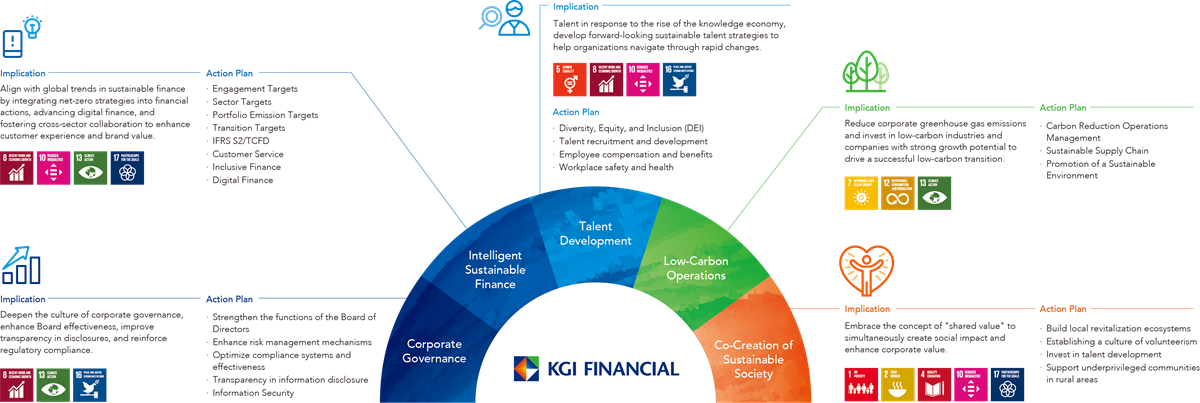
We face up to the risks and opportunities of global economic environment, and strive to integrate sustainability spirit into corporate operations, so as to create maximum value for all stakeholders.
Materiality
KGI Financial references global sustainable development trends, benchmarking against leading domestic and international companies and ESG evaluation frameworks to conduct annual materiality assessments and identifications of sustainability topics. In accordance with the Sustainability Reporting Standards (GRI 2021), the Company continued the identification results from 2024 to 2025. Through stakeholder questionnaires and due diligence, the Company gathered stakeholder opinions and conducted a comprehensive assessment of the “impact severity” and “likelihood of occurrence” for both positive and negative sustainability issues. Based on this assessment, the Company adjusted the prioritization of material topics and their associated positive and negative impacts. The results were submitted to the Sustainability and Ethical Management Committee at the board level for resolution.
Stakeholder Identification
KGI Financial reviews the focus of stakeholders every year. We analyzed the trend of international sustainable development according to the AA1000 Stakeholder Engagement Standard:2015 (AA1000 SES 2015), with the five principles of Responsibility, Influence, Tension, Diverse Perspectives, and Dependency, in addition to taking reference from domestic and foreign industry to review and identify KGI Financial‘s 8 major stakeholders (including shareholders and investors, employees, clients, community, investment targets, suppliers, government and competent authorities, and media). Through due diligence channels, the Company will gain insight into the issues that stakeholders prioritize in daily operations and will incorporate these considerations into its decision-making process.








Material Issues Identification
Step 1
View sustainability issues and impacts
Material Topics
18
Material Topics
Conducted a comprehensive review of its 2024 sustainability issue list, referencing the industry material topics outlined by the Sustainability Accounting Standards Board (SASB), the focus areas of international sustainability assessments such as the Dow Jones Best-in-Class Indices (DJBIC).
Step 2
Stakeholder survey
Stakeholders Groups
8
Stakeholders Groups
A total of 57 stakeholder impact assessment surveys were collected, including 18 from customers, 5 from community members, 3 from media representatives, 9 from employees, 3 from shareholders and investors, 9 from investees, 6 from suppliers, and 4 from government agencies and regulators.
Step 3
Assessing impact and prioritizing materiality
Material Topics
8
Material Topics
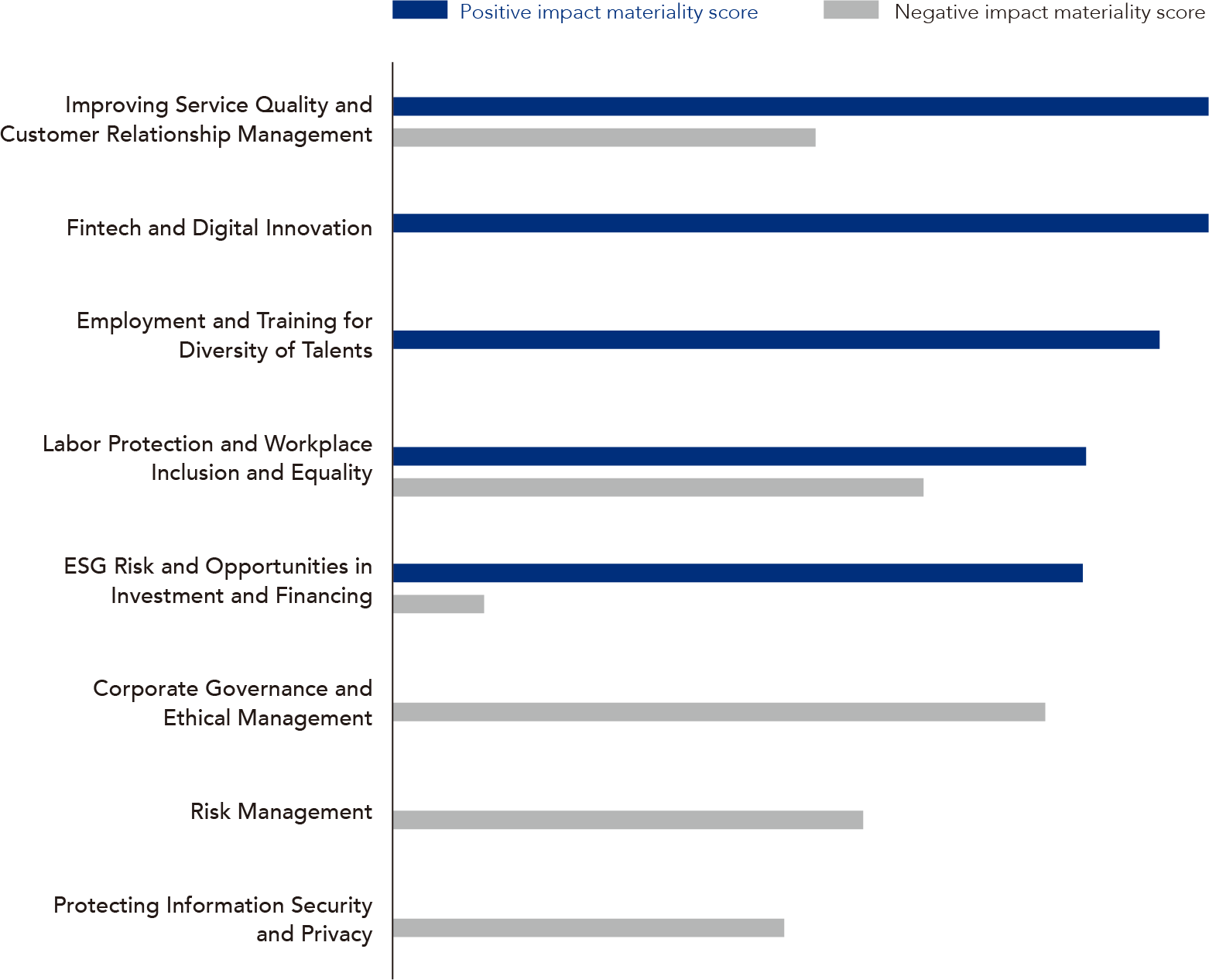
Consolidating the results of stakeholder surveys and penalty investigations, the Company assessed the likelihood and impact severity of both positive and negative effects for each issue. Prioritizing negative impacts, the Company then compiled the ranking of positive impacts and ultimately adjusted the materiality hierarchy of sustainability issues accordingly. The 18 sustainability issues have been categorized into three tiers: key, secondary, and other. The ranking of material topics for 2025 has been updated, along with the assessment of positive and negative impacts for the key topics.
Step 4
Reporting and disclosing content
Sustainability Report
1
Sustainability Report
The results of the materiality assessment on sustainability issues were submitted to and approved by the Sustainability and Ethical Management Committee in March 2026. The Sustainability Report is prepared in accordance with the identified material topics, disclosing the strategies, goals, and implementation status of the sustainability development plan. Performance is regularly reported to the Sustainability and Ethical Management Committee and the Board of Directors for oversight.
Key Topic Impact Assessment
Next
Environmental
We have made environmental protection and sustainable development our major mission and consistently uphold our responsibility to address these issues.